So my main working deck is the Haindl Tarot, it wasn’t always my working deck – It shares that title with the RWS deck I started with and the Hermetic Tarot deck. Back in the fall though I was on a trip to the other side of Michigan. The Shadowscapes Tarot. It’s one I’d been meaning to get at that point for I’ve seen the art on it. Though I had a prejudice myself that precluded me from using it. I didn’t think I could really connect with it quite well as I have a preference for different styles of decks that had a more earthy and serious and abstract in tone. It’s been sitting on my shelf for months, still in the order it came in. I had intended to read the book and get to know the cards at the time, but I was in a lull at the time when it came to divination.
I can say that recently I’ve picked it up. At first I thought – as one of the pieces of advice I’ve heard quite a bit is to assume the cards have a sentience – that they wouldn’t be willing to work with me, though I think that was a result of my own prejudices of what I would allow myself to connect with.
There are some similarities here to deciding to learn another language. There are thousands of spoken languages today just like there are a lot of decks to pick from. You could even extend this connection to Language groups.
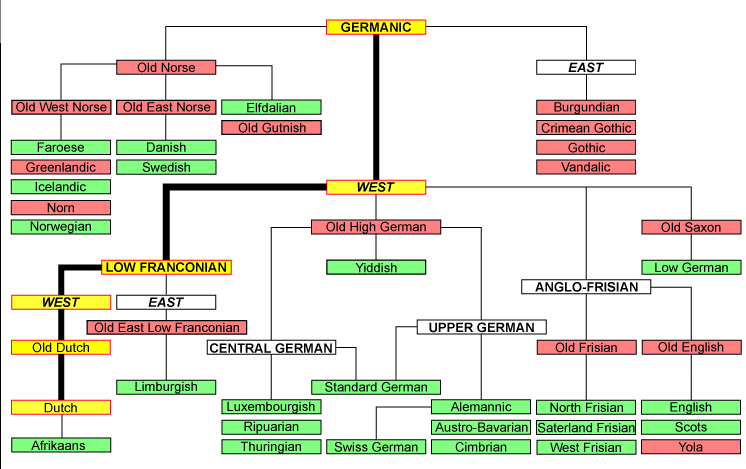
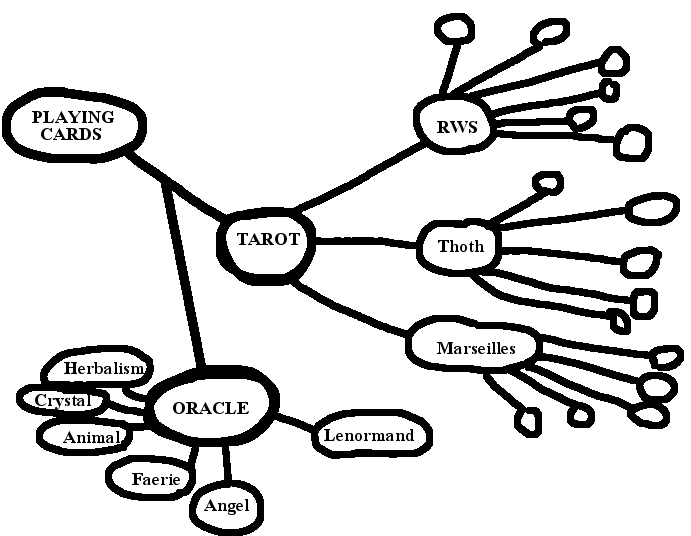
We can think of Tarot as a language family. There’s an old history of playing cards which evolved into Tarot and Oracle cards. Tarot evolved into Marseilles, RWS, then Thoth Tarot. These again inspired other decks.
So how is this like learning Dutch?
I picked up this insight the other day, in a server pertaining to Jungian psychology owned by a dutch man and his lady friend. The two of them have a bit of a trollish sense of humor. I half jokingly suggested something to them…



My thinking was, at the time, this would be a good excuse to learn a language. Dutch wasn’t something I would normally pick to learn, and it’s quite likely that if you’re in a Germanic language speaking country with coastal access, you probably learned English as well. My brother and his family are in Sweden but I still wouldn’t have much use or practice opportunity for Swedish in America.
I thought Dutch was pretty much the same, even though Western Michigan has a sizeable dutch presence. Though there’s benefits to learning an practicing other languages. So that is similar in some extent to my prejudice in working with decks that are quite different yet similar enough to the ones I’ve worked with. Compare these two cards.
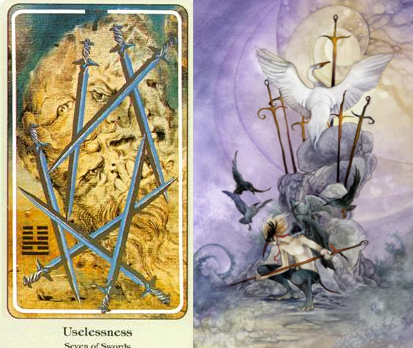
Take a look at those. They are the same in number and suit, yet very much different. Look at one and look at the other, see what each are trying to say.
Then pick which of these decks fits the following statement:
“An attempt to escape responsibility. It is the thief who tries to make away with what is not his.” Source
The Haindl deck has a very different message from the traditional sense of the 7 of swords. The (real or perceived) lack of power is quite different than the misuse of some powers. Though the misuse of power could theoretically point to the perceived lack of meaningful power. If a man can’t pay to feed his family, he will steal. If a man does not feel confident around women, he will find ways to manipulate and misrepresent himself. If a man knows his station or services aren’t needed, he may strive in politics to corrupt the system in his favor. You could say in the case of the Haindl Tarot, there is one less abstraction as it focuses on the invisible (feeling of inadequacy) versus the visible result (shortcuts, immorality.)
These cards are very different; but if you understand the suits and numerology, you can understand where they are coming from from.
Swords: Thought, communication, confrontation
Sevens: Reflection/Analysis, self control, ambition and direction.
-Chariot: Self control, dominance, ambition.
-The Tower: Destruction, wiping the slate in order to build anew
-The Star: Destiny, dreams, miracles.
“Hard times create strong men, strong men create good time.” Seems to be fitting for Sevens.
So I don’t know if or how I will learn dutch – I suppose I could learn the basics and pick the rest up passively on that discord server. The languages aren’t that far apart in the family tree.
Tarot is similar in that sense. There are different ‘cultures’ just as there are slightly different meanings and intentions within the same card across different decks. There is a shared logic.
 The Wandering Theurge